

Recognition of Manantiales Serranos as a UNESCO Global Geopark
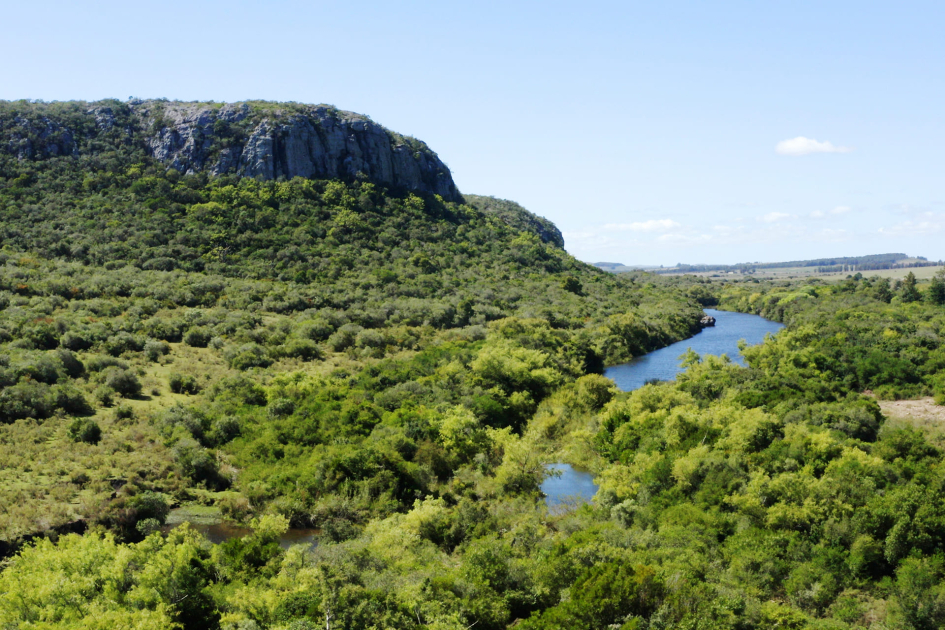
The event was organized by the Departmental Government of Lavalleja, the Ministry of Education and Culture, the Uruguayan National Commission for UNESCO, the UNESCO Regional Office in Montevideo, the Eastern Regional University Center (CURE) of the University of the Republic, the Ministry of Foreign Affairs, and various national and local institutions linked to sustainable development, heritage conservation, and tourism.
During their remarks, the authorities highlighted the strategic importance of the international recognition granted by UNESCO to Manantiales Serranos as a member of the Global Geoparks Network, emphasizing the multidimensional nature of the project and its potential as a tool for sustainable territorial development.
The Minister of Education and Culture, Prof. José Carlos Mahía, particularly underscored the value of the geopark as a bridge between heritage, education, science, tourism, and local development, highlighting the role of communities and academia in the construction of this process. He also referred to the international positioning that this recognition grants Uruguay within the framework of cultural and scientific policies linked to sustainability.
The Director of the UNESCO Regional Office in Montevideo emphasized that geoparks constitute one of UNESCO’s most innovative tools for promoting integrated territorial development, noting that these spaces not only protect geological heritage, but also strengthen education, scientific research, sustainable tourism, and community engagement with the territory.
The Governor of Lavalleja Department, Dr. Daniel Ximénez, highlighted the work carried out over several years by technical teams, public institutions, local organizations, and territorial stakeholders to achieve the incorporation of Manantiales Serranos into the UNESCO Global Geoparks Network, particularly valuing the impact that this distinction will have for the department in terms of tourism, employment, local development, and international visibility.
It should be noted that UNESCO’s International Geoscience and Geoparks Programme defines UNESCO Global Geoparks as territories with geological heritage of international significance, managed under a comprehensive approach that combines conservation, education, community participation, and sustainable development.
The recognition of “Manantiales Serranos” is of special importance for Uruguay, not only because it becomes the country’s second UNESCO Global Geopark — following “Grutas del Palacio” in the Department of Flores, which joined the Global Geoparks Network in 2013 — but also because it positions Uruguay among the limited group of countries that have more than one UNESCO-recognized geopark.
This milestone is particularly significant as it coincides with the period during which Uruguay serves on UNESCO’s Executive Board for the 2025–2030 term, during which the country seeks to strengthen its capacity for international engagement in the fields of education, culture, science, sustainability, and multilateral cooperation.
The incorporation of Manantiales Serranos into the UNESCO Global Geoparks Network contributes to consolidating Uruguay’s international image as a country committed to multilateralism, sustainability, heritage protection, and the integration of culture, science, and territorial development, in line with the strategic priorities defined by the country’s foreign policy.